
From the energy of Tokyo to the quiet traditions of Kyoto, discover how to bring together a memorable first journey through Japan.
IN BRIEF
The short answer
For a first visit to Japan, choose a route that matches the time available rather than trying to cover the whole country. Tokyo, Kyoto and Osaka make a familiar first-time combination, while a longer stay can add a region such as Hakone, the Japanese Alps, Hokkaido or Hiroshima. Check seasonal conditions, major holiday periods, transport connections and accommodation availability before fixing the itinerary.
Japan rewards a considered first journey
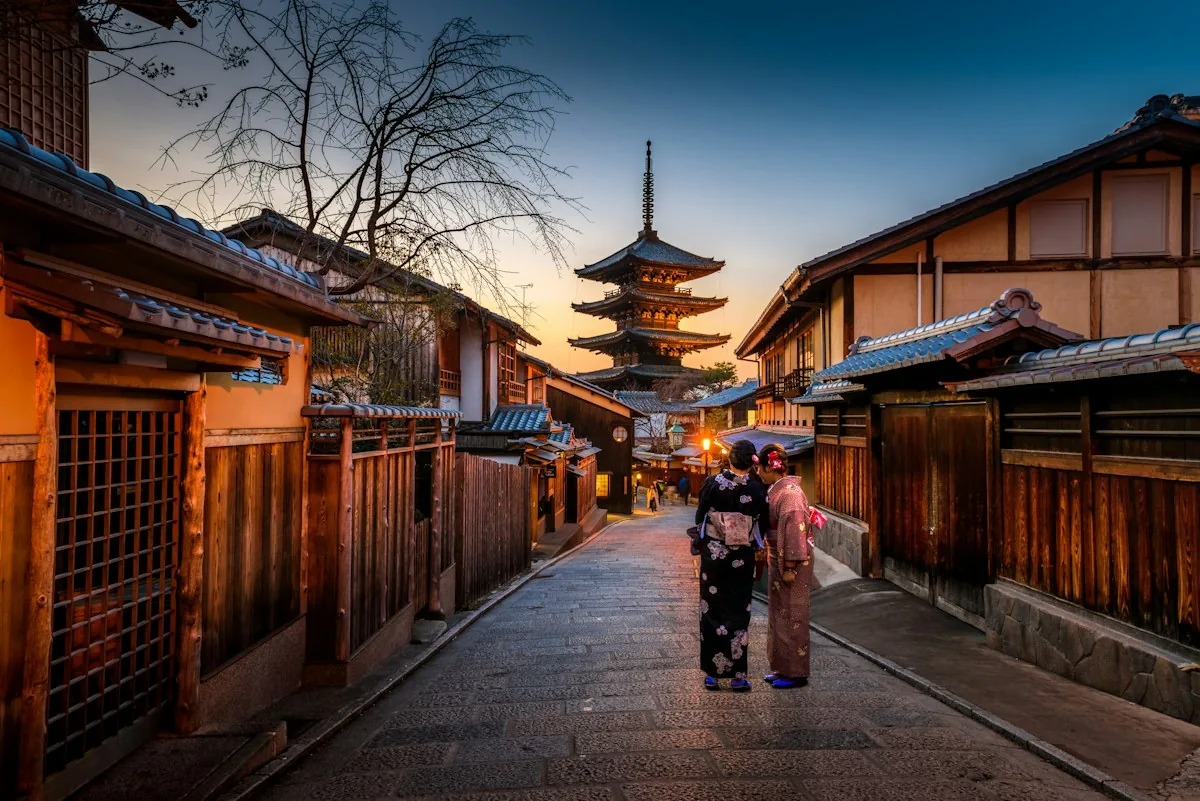
A first journey to Japan can feel like several holidays in one. Tokyo's scale and neighbourhood variety, Kyoto's historic districts and gardens, Osaka's food culture and the quieter landscapes beyond the major cities all offer different ways to understand the country. The challenge is not finding enough places to visit; it is choosing a sequence that leaves time to enjoy them.
Rather than treating Japan as a checklist, begin with the experiences that matter most to you. Architecture, contemporary design, traditional crafts, gardens, regional food, nature, shopping, family activities and seasonal festivals can each lead to a different route. A good itinerary makes room for these interests without turning every day into a transfer.
Choose a route that fits the time available
For a shorter visit, consider one principal base such as Tokyo or Osaka and add nearby day trips only when travel time makes sense. Fewer hotel changes can preserve time for neighbourhood exploration and reduce the effort of moving luggage. If you have roughly 10 to 14 days, a Tokyo–Kyoto–Osaka journey can provide a balanced introduction, subject to your arrival and departure arrangements.
With more time, look beyond the familiar route. The Japanese Alps, Kanazawa, the Setouchi region, Hiroshima, Hokkaido and Okinawa each create a different kind of journey. These regions are not interchangeable extensions: distances, climate, transport options and the best time to visit vary. Select one additional region that genuinely matches your interests rather than adding several distant stops simply to increase the number of destinations.
Think about the direction of travel as well. An open-jaw flight, arriving in one city and departing from another, may reduce backtracking when flight schedules and fares work in your favour. Compare the total journey, not just the train journey between two cities.
Understand the seasons and busy travel periods
Japan has four distinct seasons, but conditions differ substantially between the north and south and between coastal, urban and mountainous areas. Spring and autumn are popular for their seasonal scenery; summer can be hot and humid in many places, while winter brings snow to some regions and clearer, milder conditions to others. A season that suits a city break may not suit a mountain or island itinerary.
The Japan National Tourism Organization highlights New Year, Golden Week in late April and early May, and the summer holiday period around Obon as busy domestic travel periods. During these windows, transport and accommodation can be more heavily booked. If your dates are fixed, reserve important stays and long-distance travel early. If they are flexible, compare nearby dates and less-visited regions.
Use seasonal descriptions as a starting point, not a forecast. Before departure, check current weather, local transport notices, attraction schedules and any regional advisories from official sources.
Plan transport, luggage and accommodation together
Japan's rail network makes many intercity journeys convenient, but a route still needs practical planning. Check the location of each hotel in relation to the stations and neighbourhoods you intend to visit. A low room rate far from your planned activities can add daily travel time and complexity.
Compare individual tickets and any available rail passes against your actual route and travel dates. Do not assume a pass will automatically save money. Include seat reservations, airport transfers, local transport and any journeys not covered by a pass in the calculation. Timetables, service patterns and pass conditions can change, so verify them before purchase.
Consider luggage delivery or other transfer arrangements if you are moving between several hotels. JNTO's planning resources explain services and practical customs that can help first-time visitors prepare. Pack for the season and the activities planned, and leave enough time for station navigation and check-in.
Make room for local culture and everyday discovery
Japan's appeal is not limited to its headline attractions. A morning walk through a residential neighbourhood, a regional market, a small museum, a craft workshop or a meal chosen with local guidance can become a memorable part of the trip. Leave unstructured time in the itinerary so that these experiences can happen naturally.
Learn a few basic courtesies before travelling. Observe local guidance at temples, shrines, restaurants, public baths and other shared spaces. Customs differ by setting, and respectful observation is often more useful than assuming one rule applies everywhere. Official visitor information is a good place to check practical etiquette and local expectations.
Food can also shape the route. Instead of trying to sample everything in every city, choose a few regional specialities and allow time to understand their context. A food-focused day may be more rewarding when it includes a market, a neighbourhood and a meal rather than a long list of reservations.
A practical planning sequence
Start by fixing the broad travel window and the number of nights. Next, identify the two or three experiences that matter most, then select regions that support them. Only after that should you decide the order of cities, accommodation locations and transport. This sequence helps prevent an itinerary from becoming a collection of disconnected reservations.
Before confirming arrangements, review cancellation terms, baggage rules, transfer times, opening days and any advance booking requirements for experiences. Check official travel information again close to departure, particularly if your itinerary includes mountain areas, seasonal activities or domestic flights.
A personalised Japan journey should reflect the traveller, not a standard route. Aiir Travel can help organise a consultation around preferred pace, accommodation style, interests, travel dates and the balance between major cities and regional discovery.
TRAVEL QUESTIONS
Questions travellers ask
How many days should a first-time visitor spend in Japan?
There is no single ideal duration. A shorter trip is usually more comfortable with one main base and nearby excursions; around 10–14 days can allow a more measured Tokyo–Kyoto–Osaka route. Add time if you want to include distant regions or a slower pace.
Is Tokyo, Kyoto and Osaka a good route for a first Japan trip?
It is a practical introduction for many first-time visitors because the cities offer contrasting experiences and established transport connections. The best sequence depends on arrival and departure airports, interests and the time available.
When is Japan busiest for domestic travel?
JNTO identifies New Year, Golden Week and the summer holiday period around Obon as busy travel periods. Dates and local conditions vary, so check the official calendar and book key transport and accommodation early when travelling at these times.
FURTHER READING
Official information and useful references
- JNTO — First-time visitor planning guide ↗Japan National Tourism Organization
- JNTO — Tips for planning a trip to Japan ↗Japan National Tourism Organization
- JNTO — Travel FAQ and peak travel periods ↗Japan National Tourism Organization
EXPLORE FURTHER
Discover japan
Explore destination highlights and ideas for a personalised journey.
Explore the destination ↗MAKE IT YOUR JOURNEY
Inspired to travel?
Tell us what interests you. We'll help shape a journey around your preferences.
Plan Your Journey ↗